
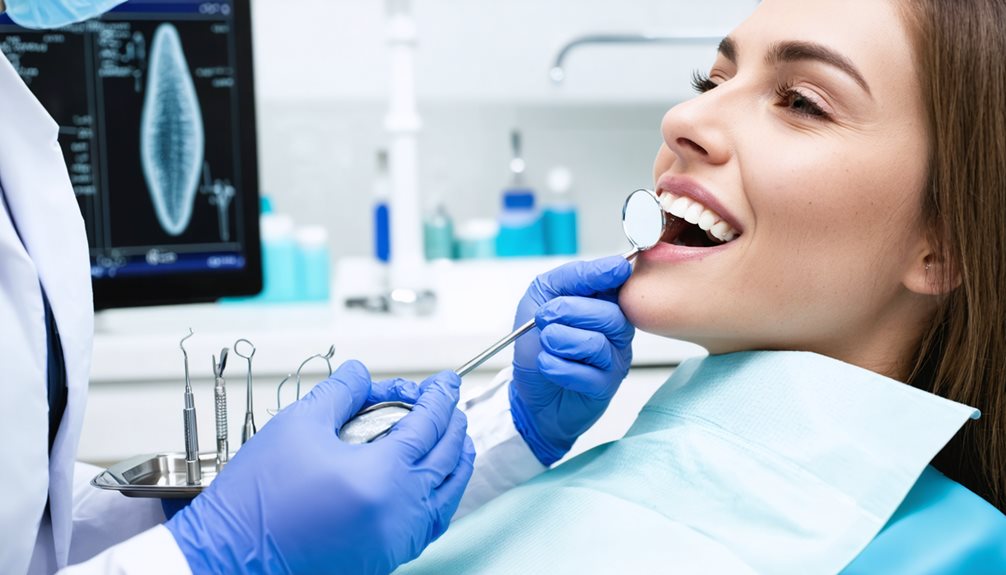
When you’re performing oral cancer screenings, it’s essential to focus on a few key strategies that can greatly enhance your effectiveness. By placing a strong emphasis on patient education, you can help them appreciate the importance of early detection and the role it plays in their overall health outcomes. Incorporating advanced diagnostic tools, like intraoral cameras and fluorescence devices, can improve your diagnostic capabilities. But how do you guarantee that your patients fully grasp the implications of their screenings and feel comfortable asking questions? Let’s explore how you can build a more engaging and trusting environment in your practice.
Identify Early Warning Signs
Recognizing the early warning signs of oral cancer can greatly increase the chances of successful treatment and recovery. As a dental professional, your expertise in symptom recognition is essential. Focus on identifying persistent sores, erythroplakia (red patches), leukoplakia (white patches), or unexplained bleeding in the oral cavity. These symptoms, while not exclusive to oral cancer, require your immediate attention and further evaluation.
Understanding risk factors is equally important in your screening process. Tobacco use, excessive alcohol consumption, and human papillomavirus (HPV) infection greatly elevate the risk of oral cancer. Advise your patients on mitigating these risks by encouraging lifestyle changes and regular screenings, especially for those with a family history of cancer.
Utilize State-of-the-Art Tools
In light of recent advancements, utilizing state-of-the-art tools for oral cancer screening enhances your diagnostic capabilities. Embrace the power of advanced imaging and diagnostic technology to provide your patients with the highest quality care. These cutting-edge tools not only refine your clinical decision-making but also offer a sense of control over the detection and management of potential oral malignancies.
- Intraoral Cameras: Utilize high-resolution intraoral cameras to capture detailed images of the oral cavity, allowing for precise examination and documentation. This aids in detecting subtle lesions that might be missed during a visual inspection.
- Fluorescence Visualization Devices: These devices use specific wavelengths of light to highlight abnormal tissue changes that are invisible to the naked eye. Include them in your toolkit to enhance tissue differentiation and improve early detection rates.
- Digital Radiography: Shift from traditional to digital X-rays for better image quality and reduced radiation exposure. This technology facilitates clearer visualization of bone and soft tissue structures, essential for thorough assessments.
- Cone Beam Computed Tomography (CBCT): Implement CBCT to obtain three-dimensional images, providing detailed views of complex anatomical areas. This is especially beneficial for evaluating tumor invasiveness and planning surgical interventions.
Enhance Patient Communication
While state-of-the-art tools elevate your diagnostic capabilities, effective patient communication is equally important in oral cancer screening. You need to guarantee that your patients understand every step of the screening process. Patient education begins with explaining the significance of early detection and how it directly impacts prognosis. Use layman’s terms to describe the procedures while incorporating technical terminology judiciously to boost credibility.
Incorporate effective feedback mechanisms to assess patients’ understanding. Ask questions that encourage them to express any concerns or uncertainties. This active engagement not only builds trust but also empowers patients, giving them a sense of control over their health decisions. Provide clear, concise information about potential findings and the implications of each. Visual aids can serve as powerful tools in illustrating complex concepts.
When discussing results, whether positive or negative, maintain a calm demeanor. Offer thorough explanations and, if necessary, suggest actionable next steps. By fostering an environment of open communication, you enhance patients’ comfort and cooperation. This proactive approach not only strengthens the dentist-patient relationship but also greatly contributes to the overall effectiveness of the oral cancer screening process.
Frequently Asked Questions
How Often Should Oral Cancer Screenings Be Performed by Dentists?
You’re wondering about the frequency guidelines for oral cancer screenings. Dentists should perform screenings annually using advanced screening techniques. This proactive approach guarantees early detection, giving patients more control over their oral health outcomes and treatment options.
What Qualifications Should a Dentist Have for Oral Cancer Screening?
You should verify your dentist has thorough dental education and proficiency in advanced screening techniques. This expertise allows for accurate detection and early intervention, giving you control over your oral health and peace of mind.
Are There Specific Age Groups More at Risk for Oral Cancer?
You’re wondering about age groups at risk. Individuals over 40, especially smokers or heavy drinkers, fall into high-risk demographics. Early detection through regular screenings greatly improves outcomes, so prioritize your health by staying informed and proactive.
Can Lifestyle Changes Reduce the Risk of Oral Cancer?
You can notably reduce oral cancer risk by adopting healthier dietary habits and implementing tobacco cessation. Prioritize nutrient-rich foods and eliminate tobacco use to exert control over your health and lower potential carcinogenic exposure.
Is Oral Cancer Screening Covered by Dental Insurance Plans?
You should review your insurance policies to determine if oral cancer screening is covered. Coverage limits can vary considerably. Contact your provider directly to make certain you understand any specific terms and conditions related to this service.

