
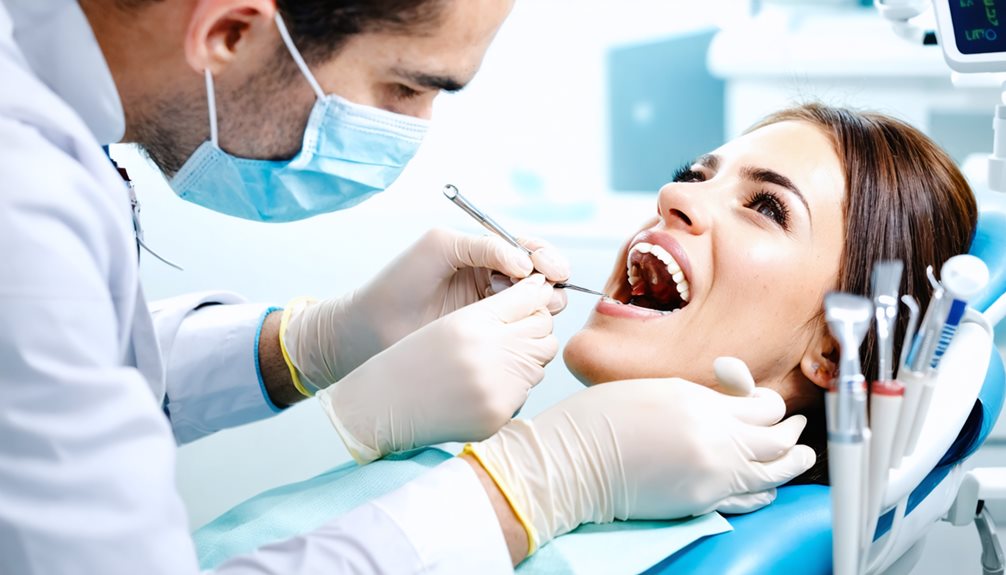
When you’re scheduled for an oral cancer screening, your healthcare provider will take a close look at your mouth, examining areas like your lips, tongue, and palate for any unusual signs. They’ll also feel for lumps and check your lymph nodes. You might wonder what happens if they find something concerning. While these screenings are straightforward, they play a vital role in early detection, potentially leading to further tests if needed. So, what exactly are the steps involved, and how do they impact your health? This exploration may reveal more than you expect.
Visual Examination
When conducting a visual examination for oral cancer screening, you’ll systematically inspect the oral cavity for any abnormalities. Begin by observing the patient’s lips, using their symmetry and color as initial visual cues. You’ll then proceed to examine the buccal mucosa, noting any changes in texture or pigmentation. The tongue will require careful inspection for lesions or nodules, paying close attention to the lateral borders and ventral surface, as these areas are commonly affected in oral cancer cases. You’ll also assess the palate and pharyngeal area, looking for any suspicious lesions or asymmetries.
Throughout the examination, maintain an acute awareness of visual cues that might suggest pathology, such as leukoplakia, erythroplakia, or ulcerations that resist healing. The salivary glands and floor of the mouth are vital areas for scrutiny, given their potential to harbor malignancies. By methodically evaluating each segment of the oral cavity, you guarantee a thorough assessment of oral health.
It’s essential to apply evidence-based guidelines during the examination process, enhancing the likelihood of early detection and intervention. By focusing on these visual cues and adhering to established protocols, you’ll empower yourself to make informed clinical decisions, maintaining control over patient outcomes.
Physical Inspection
A meticulous physical inspection is essential for thorough oral cancer screening. During this process, your healthcare provider employs a palpation technique to assess the tissues in your mouth, neck, and jaw areas. The objective is to detect any abnormalities such as lumps, nodules, or irregular textures that could indicate potential malignancies. You should know that this hands-on examination is crucial for identifying changes that might not be visible during a visual examination alone, allowing for an all-encompassing evaluation of your oral health.
Your clinician will systematically palpate various structures, including the floor of your mouth, the tongue, and the lymph nodes in your neck. These areas are particularly scrutinized due to their association with common risk factors for oral cancer, such as tobacco use, alcohol consumption, and human papillomavirus (HPV) infection. By understanding these risk factors, you can better appreciate the significance of a detailed physical inspection in early detection. This proactive approach empowers you to make informed decisions about further diagnostic testing if needed.
Diagnostic Testing
Following the physical inspection, diagnostic testing plays a vital role in confirming or ruling out oral cancer. You’ll encounter several biopsy techniques designed to obtain tissue samples for histopathological examination. The most common technique is the incisional biopsy, where a small tissue portion is removed for analysis. Alternatively, a fine needle aspiration (FNA) might be performed, especially if lymph nodes require evaluation. Understanding these procedures empowers you to make informed decisions, ensuring that you are an active participant in your healthcare journey.
It’s essential to take into account your risk factors when approaching diagnostic testing. These factors include tobacco use, heavy alcohol consumption, exposure to human papillomavirus (HPV), and a history of oral cancer. If you possess any of these risk factors, your healthcare provider may recommend more vigilant screening and testing protocols. By being aware of these elements, you can advocate for yourself and engage in a proactive stance toward managing your oral health.
Frequently Asked Questions
How Often Should I Get an Oral Cancer Screening?
You should follow frequency recommendations for oral cancer screenings based on screening guidelines. Typically, adults should have one annually, but higher-risk individuals might need more frequent evaluations. Consult your healthcare provider to tailor the schedule to your specific needs.
Are There Any Symptoms to Watch for Between Screenings?
Between screenings, watch for early signs like persistent mouth sores, unexplained bleeding, or lumps. Recognize warning symptoms such as difficulty swallowing, numbness, or changes in voice. Detecting these early enhances control over your health outcomes.
Can Lifestyle Changes Reduce My Oral Cancer Risk?
Yes, lifestyle changes can reduce your oral cancer risk. Engage in dietary changes by incorporating fruits and vegetables. Prioritize tobacco cessation, as quitting smoking markedly lowers risk. Clinical evidence supports these interventions, empowering you to take control.
Is Oral Cancer Screening Covered by Health Insurance?
You should verify with your health plan, as insurance coverage for oral cancer screening varies. Some plans include it, reducing your screening costs, but others might not. Consult your provider for specific details on coverage and potential expenses.
What Should I Do if I’m Anxious About the Screening?
If you’re anxious about the screening, practice deep breathing exercises to reduce stress. Join support groups to share experiences and gain insights. Evidence shows these strategies enhance emotional regulation, providing you with more control over your anxiety.

