
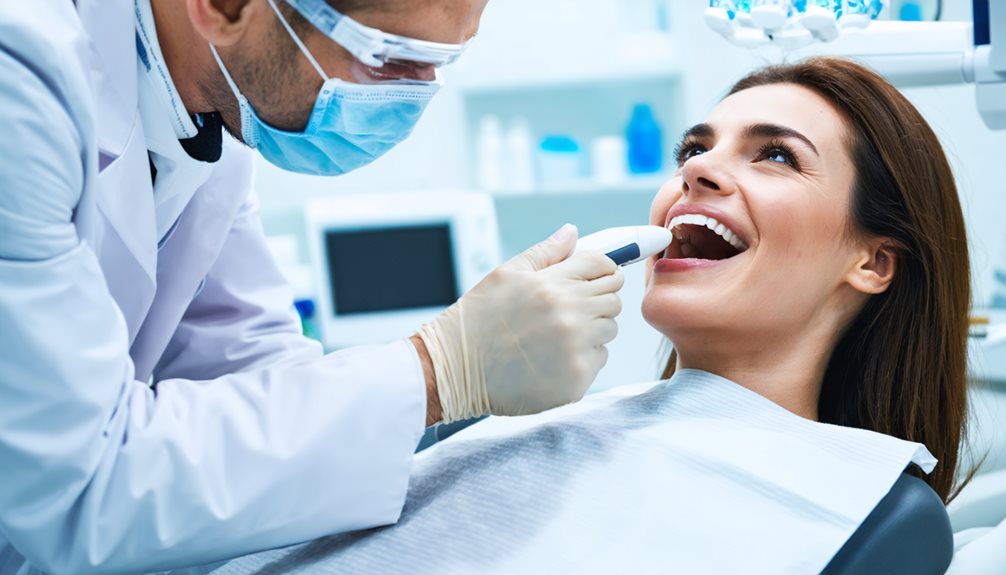
Imagine sitting in a dental chair, where your visit isn’t just about cleaning but includes a cutting-edge oral cancer screening. Top dentists are now harnessing advanced technologies like saliva testing and fluorescence imaging to detect early signs of oral cancer. These methods aim to catch potential issues before they become severe, all while ensuring your comfort. As you consider the importance of your dental health, you might wonder how these innovative practices are reshaping the field and what it means for your own care. What exactly are these technologies, and how do they work?
Advanced Oral Cancer Detection
Amidst the continuously evolving landscape of medical technology, advanced oral cancer detection methods have emerged as essential tools in the fight against this disease. As someone seeking control over your healthcare decisions, understanding these advancements is vital. Saliva testing, a non-invasive and efficient method, has gained traction for its ability to detect biomarkers associated with oral cancer. This technique allows for early diagnosis, increasing the chances of successful treatment. By analyzing specific proteins and genetic material in your saliva, this method provides a thorough profile of potential risks.
Fluorescence imaging offers another layer of precision in detecting oral cancer. This technique utilizes special light to differentiate between healthy and abnormal tissues in your mouth. The fluorescence effect highlights areas of concern, guiding healthcare professionals to target biopsies more accurately. With these advanced methods, the detection process becomes more streamlined, reducing unnecessary procedures and ensuring that issues are addressed promptly.
Innovative Screening Technologies
Embracing innovation in oral cancer screening, new technologies are transforming the early detection landscape with unprecedented accuracy and efficiency. You can now leverage advancements like salivary biomarkers and fluorescence imaging to detect oral cancer at its earliest stages. Salivary biomarkers, for instance, offer a non-invasive method that analyzes saliva samples for specific proteins or genetic material linked to cancer. This approach not only minimizes patient discomfort but also enhances the precision of early diagnosis. The ability to identify these biomarkers means you can catch potential issues long before they manifest into more severe conditions.
Fluorescence imaging is another groundbreaking tool you should consider. It involves using specific wavelengths of light to illuminate oral tissues, highlighting abnormal areas that might not be visible to the naked eye. This technique provides a visual map of the mouth, pinpointing areas of concern with remarkable clarity. By incorporating fluorescence imaging into your screening practices, you can improve diagnostic accuracy and reduce the likelihood of false negatives. These technologies empower you to make informed decisions, enabling a proactive approach to patient care and ultimately improving outcomes. Embrace these advancements to maintain control and stay at the forefront of oral health innovation.
Leading Dentists in Oral Health
As cutting-edge technologies reshape oral cancer screening, the role of leading dentists becomes increasingly significant in driving these advancements into everyday practice. You need dentists who are not just skilled in technical procedures but are also at the forefront of preventive dentistry. They understand that early detection is key and employ innovative tools that guarantee more accurate screenings. By integrating these technologies, they provide you with the highest standard of care.
Leading dentists don’t just focus on treatment; they prioritize patient education, empowering you to take control of your oral health. They offer detailed, personalized advice, helping you understand risk factors and preventive measures. This proactive approach is vital in preventing oral cancer, as it emphasizes the importance of regular check-ups and screenings.
In a rapidly evolving industry, these dentists stay updated with the latest research and advancements. They attend conferences, participate in workshops, and continually refine their skills. By choosing a dentist committed to staying ahead of the curve, you confirm that you’re receiving care that is both current and thorough. It’s about more than just treatment—it’s about fostering a partnership focused on prevention and education, ultimately leading to better health outcomes for you.
Frequently Asked Questions
What Are Common Symptoms of Oral Cancer?
You should watch for early signs like persistent mouth sores, red or white patches, and difficulty swallowing. Diagnostic methods include visual exams and biopsies, ensuring timely detection. Early intervention gives you more control over your health outcomes.
How Often Should One Get Screened for Oral Cancer?
You should get screened for oral cancer annually, but if you have risk factors like tobacco use or heavy alcohol consumption, increase the screening frequency. Being proactive guarantees control over your health and early detection.
Are There Lifestyle Changes to Reduce Oral Cancer Risk?
To reduce oral cancer risk, prioritize tobacco cessation and adopt a healthy diet rich in fruits and vegetables. Limit alcohol consumption and maintain oral hygiene. These lifestyle changes empower you to take control of your oral health.
Is Oral Cancer Screening Covered by Insurance?
You should check your insurance policies to see if oral cancer screening is covered. Coverage limits vary widely, so review your plan details carefully or contact your provider to understand the specifics and guarantee you’re fully informed.
What Is the Survival Rate for Oral Cancer if Detected Early?
If you detect oral cancer early, the survival rate can be as high as 80-90%. Early detection greatly improves cancer prognosis, giving you better control over treatment options and outcomes, enhancing your ability to manage health proactively.

