
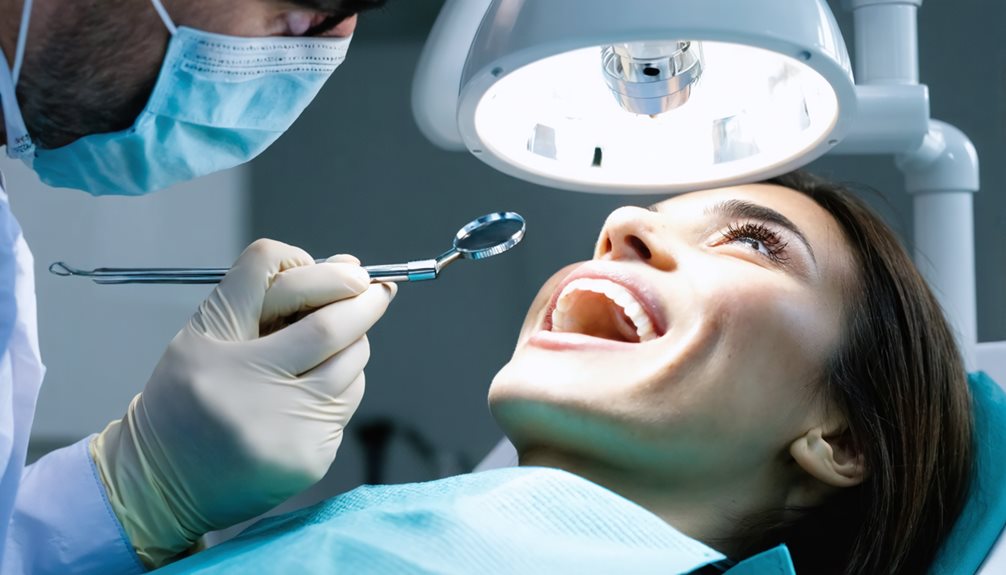
You might wonder what exactly sets skilled dentists apart in detecting oral cancer. It’s not just about having a trained eye; it’s about leveraging advanced diagnostic tools and maintaining a keen understanding of patient history. When dentists use cutting-edge imaging technologies and combine them with thorough evaluations, they spot subtle signs that others might miss. Their ongoing professional development guarantees they’re always ahead in the latest detection methods. But how do these elements come together effectively to catch early signs of oral cancer? The answer might surprise you and could change how you view dental visits forever.
Advanced Diagnostic Techniques
In the domain of oral cancer detection, advanced diagnostic techniques are vital for early and accurate identification. As a professional seeking precise results, you understand that employing a combination of biopsy methods and imaging technology is fundamental. Biopsy methods, including incisional and excisional biopsies, provide histopathological confirmation, offering a definitive diagnosis. With these procedures, you can extract tissue samples for microscopic examination, guaranteeing you identify malignant cells at the earliest stage.
Imaging technology complements biopsy methods by offering non-invasive insights into suspicious lesions. Techniques such as optical coherence tomography (OCT), autofluorescence imaging, and reflectance confocal microscopy (RCM) provide detailed visualization of tissue architecture. These technologies allow you to assess lesion characteristics, including depth and extent, without surgical intervention. By integrating imaging technology into your diagnostic approach, you enhance your ability to differentiate between benign and malignant conditions.
Your adept use of these advanced diagnostic techniques is vital in maintaining control over the detection process. Through precise execution, you guarantee that oral cancer is identified accurately and promptly, ultimately improving patient outcomes. Mastery of these techniques empowers you to offer superior care, emphasizing the importance of early and accurate detection in clinical practice.
Comprehensive Patient Evaluation
A thorough patient evaluation is essential for effective oral cancer detection and management. You must start with an in-depth patient history, which provides insights into potential risk factors such as tobacco use, alcohol consumption, and familial predispositions. This information isn’t just background; it directly informs your diagnostic process, allowing you to tailor the examination to each individual. Prioritize gathering detailed data on symptoms like persistent oral sores, unexplained bleeding, or changes in sensation, as these can be early indicators of malignancy.
Next, conduct a meticulous visual examination. Utilize adequate lighting and magnification to assess the oral cavity’s soft tissues, including the lips, cheeks, tongue, floor of the mouth, hard and soft palates, and pharynx. Pay close attention to any lesions, discolorations, or irregularities in texture. Palpation of the lymph nodes for any enlargement is also critical, as this could signal metastasis.
Document your findings with precision, noting any abnormalities and their dimensions, location, and characteristics. This thorough approach guarantees you don’t overlook subtle signs that could progress into serious conditions. By mastering these evaluative techniques, you’re well-equipped to control the diagnostic process and enhance patient outcomes.
Ongoing Professional Development
Enhancing your skills through ongoing professional development is essential to staying at the forefront of oral cancer detection techniques. As a dentist committed to excellence, you understand the significance of continuing education in refining your diagnostic acumen. Attending workshops, seminars, and conferences focused on the latest advancements in oral pathology guarantees you remain updated on emerging technologies and methodologies. This continual learning process empowers you to make informed clinical decisions, ultimately improving patient outcomes.
Engaging in specialist training allows for the mastery of complex procedures and the integration of cutting-edge tools into your practice. Advanced diagnostic techniques such as brush biopsies, fluorescence visualization, and molecular markers become part of your arsenal, enhancing your ability to detect early-stage malignancies. By pursuing these targeted educational opportunities, you’re not only expanding your competence but also reinforcing your role as a trusted authority in oral cancer detection.
It’s vital to cultivate a rigorous approach to professional development, incorporating peer consultations and case studies to validate your techniques. By doing so, you maintain control over your clinical environment, guaranteeing the highest standard of care. Your commitment to ongoing education and specialist training is instrumental in safeguarding patient health.
Frequently Asked Questions
How Can Lifestyle Factors Influence Oral Cancer Detection?
Your dietary habits and smoking cessation greatly impact oral cancer detection. Poor nutrition and tobacco use increase risk, making regular screenings essential. By adopting healthy lifestyle choices, you enhance early detection capabilities and improve clinical outcomes.
What Role Does Patient Education Play in Early Oral Cancer Detection?
In early oral cancer detection, your role involves fostering patient awareness through effective communication strategies. Educate patients about symptoms and risks, empowering them to recognize potential issues early, ultimately enabling more timely clinical interventions and improved outcomes.
How Does Time Management Impact Successful Oral Cancer Screenings?
Efficient time management optimizes your screening schedules and guarantees thorough patient follow-ups. By prioritizing these elements, you enhance detection rates and maintain control over the diagnostic process, ultimately improving early identification of potential oral cancer indicators.
What Are the Common Signs of Oral Cancer Patients Should Look For?
You should monitor for unexplained lesions or persistent soreness within the oral cavity. These signs may indicate potential malignancies. Early detection through self-examination aids effective intervention. Maintain vigilance for any abnormalities to guarantee ideal oral health management.
How Do Interpersonal Skills Aid Dentists in Discussing Oral Cancer Concerns With Patients?
Your empathetic communication builds patient trust, effectively facilitating discussions about oral cancer concerns. By using precise, clinical language, you empower patients to understand their condition, fostering informed decision-making and enhancing adherence to recommended screenings and treatments.

