
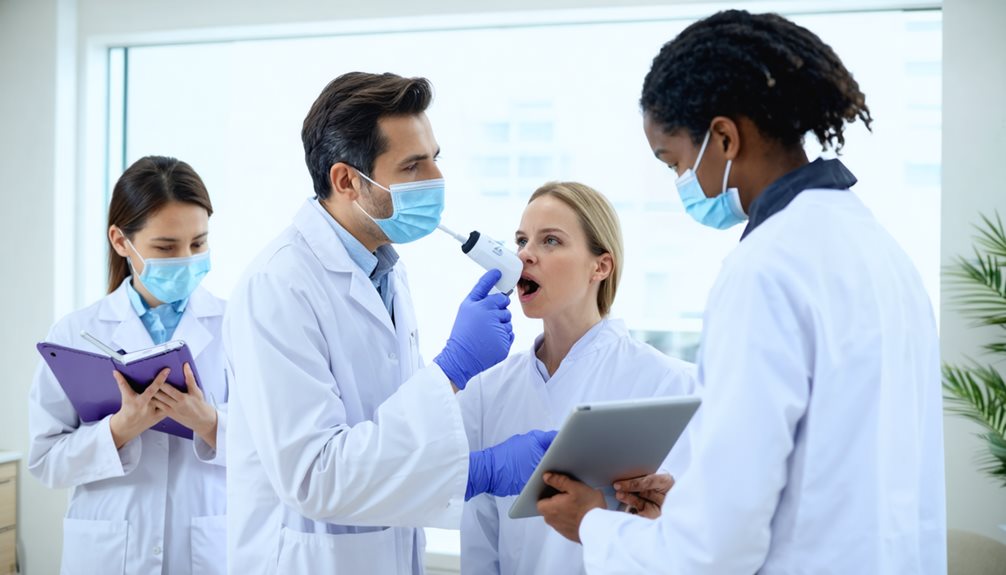
When you’re considering the significance of oral cancer screening, understanding who the top experts are becomes fundamental. These professionals, including leading dental oncologists and renowned periodontists, utilize cutting-edge technologies to detect early signs of cancer. They don’t just rely on traditional methods; instead, they harness advanced visualization tools to guarantee the most accurate diagnoses. Oral pathology specialists play an important role, too, by interpreting complex findings and guiding treatment plans. But what sets these experts apart from others, and why is their approach so essential? Stay tuned to uncover the unique expertise they bring to the table.
Leading Dental Oncologists
Leading dental oncologists are at the forefront of advancing oral cancer screening techniques, leveraging cutting-edge technology and evidence-based practices to improve early detection rates. By integrating diagnostic advancements such as enhanced visualization tools, these specialists increase the likelihood of identifying precancerous lesions at an earlier stage. You’ll find that these advancements include the use of fluorescence visualization and toluidine blue staining, which provide detailed contrast in abnormal tissues, thereby facilitating more precise assessments.
In addition to diagnostic methods, leading treatments now incorporate targeted therapies that focus on the molecular biology of individual tumors. By tailoring treatment plans based on genetic markers, oncologists guarantee that interventions are as effective as possible, minimizing side effects while maximizing therapeutic outcomes. For you, this means a treatment approach that’s not only cutting-edge but also highly personalized.
Further, dental oncologists utilize digital imaging systems to create thorough risk profiles, empowering you to make informed decisions about your oral health. This data-driven strategy enables a proactive approach, where continuous monitoring can lead to timely interventions. By staying informed about these developments, you’re better equipped to take control of your health, guaranteeing early and accurate diagnoses.
Renowned Periodontists
While dental oncologists focus on early detection and treatment of oral cancer, renowned periodontists play an equally important role in maintaining overall oral health, particularly in the context of cancer prevention and recovery. Their expertise in managing gum disease provides a vital intersection between periodontal health and systemic conditions such as cancer. By controlling inflammation and infection in the gums, periodontists can help reduce potential carcinogenic risk factors.
You’ll find that top periodontists emphasize patient education, empowering you with knowledge about the links between periodontal disease and oral cancer. Understanding these connections enables you to take proactive steps in preventive care. They often use evidence-based strategies to monitor gum health, employing scaling and root planing techniques to mitigate periodontal pockets where harmful bacteria thrive.
Moreover, periodontists are adept at collaborating with other healthcare providers, ensuring you receive a thorough approach to your oral health. This interdisciplinary strategy not only aids in early cancer detection but also supports recovery and rehabilitation efforts. The technical precision and analytical skills of a renowned periodontist can greatly influence your oral health trajectory, providing you with the control to maintain a healthier oral environment and potentially reduce cancer risks.
Oral Pathology Specialists
Oral pathology specialists play a vital role in the diagnosis and analysis of diseases affecting the oral and maxillofacial regions. Their expertise is essential in maintaining your oral health, as they employ advanced diagnostic techniques to identify conditions that might otherwise go unnoticed. By examining tissue samples, they can detect abnormalities at a cellular level, providing a thorough evaluation of potential malignancies. This detailed analysis enables early intervention, which is critical in the effective management of oral cancer.
When you’re consulting an oral pathology specialist, you gain access to an array of diagnostic techniques, such as histopathological examination and immunohistochemistry. These methodologies allow for precise identification of pathological changes within oral tissues, offering a clear pathway for treatment planning. Specialists in this field are well-versed in correlating clinical findings with microscopic evidence, guaranteeing that you receive a complete assessment of your oral health status.
The integration of cutting-edge technology, including molecular diagnostics, further enhances their ability to detect genetic markers associated with oral cancer. By working closely with your dental and medical team, oral pathology specialists make certain that you maintain control over your oral health, optimizing outcomes through targeted, evidence-based strategies.
Frequently Asked Questions
How Often Should One Undergo Oral Cancer Screening?
You should follow screening guidelines recommending oral cancer screenings every 6 to 12 months. Frequency recommendations depend on risk factors such as age, tobacco use, and alcohol consumption. Regular screenings allow early detection, potentially improving treatment outcomes.
What Are the Early Warning Signs of Oral Cancer?
You should focus on symptom awareness, including persistent sores, red or white patches, and unexplained bleeding. Recognize risk factors like tobacco use and alcohol consumption. Identifying these signs early increases your control over oral cancer outcomes.
Can Lifestyle Changes Reduce the Risk of Oral Cancer?
Yes, lifestyle changes can reduce oral cancer risk. Implement dietary modifications by increasing fruits and vegetables; they’re rich in antioxidants. Prioritize tobacco cessation to greatly lower exposure to carcinogens. These evidence-based strategies empower you to control your health.
Are There Any Non-Invasive Methods for Oral Cancer Detection?
You can utilize non-invasive methods like saliva testing and advanced imaging techniques for oral cancer detection. Saliva tests analyze biomarkers, while imaging techniques provide detailed visualization, offering precise, evidence-based results without the discomfort of invasive procedures.
How Effective Are Home Screening Kits for Oral Cancer?
Home detection kits for oral cancer offer convenience but have varied screening accuracy. You should rely on them as a preliminary step only. Clinical evaluations are essential for definitive diagnosis, ensuring control over potential misdiagnosis or delayed treatment.

