
When you’re considering oral cancer screenings, it’s important to approach them with the right knowledge and preparation. You might wonder how to choose the best dentist or why discussing your lifestyle habits is vital. Knowing what to expect during the screening and how to interpret the results can greatly impact your health decisions. But what about those subtle symptoms that might go unnoticed? And how do you keep up with the latest advancements without feeling overwhelmed? There’s more to uncover about these screenings, and each tip can guide you toward a healthier future.
Choose a Qualified Dentist
Selecting a qualified dentist is essential for effective oral cancer screening. You need a professional with the right dentist qualifications to guarantee that every aspect of the examination is thorough and accurate. Start by verifying that the dentist is licensed and certified in your state, as this assures they meet professional standards. Additionally, consider their experience in oral cancer screenings specifically. A dentist who regularly performs these screenings is more likely to catch subtle changes that might go unnoticed by others.
In terms of screening technology, the tools and methods employed are pivotal. Modern screening technology, such as fluorescence visualization and brush biopsies, enhances the detection of abnormal tissues. Verify that your dentist uses up-to-date equipment and techniques, as these advancements can greatly improve the accuracy of the screening. Ask about their familiarity with the latest technology and their commitment to ongoing education, which reflects their dedication to providing the best care.
Know the Risk Factors
Understanding the qualifications of your dentist is only one part of ensuring effective oral cancer screening; it’s equally important to be aware of the risk factors that can increase your likelihood of developing this disease. Recognizing these factors allows you to make informed decisions and take proactive steps toward early detection. Key high risk behaviors include tobacco use, both smoked and smokeless, which greatly elevate your risk. Alcohol consumption, especially in conjunction with tobacco, additionally compounds this danger.
Human papillomavirus (HPV) infection, particularly HPV-16, is another risk factor, emphasizing the importance of vaccinations and safe practices. Prolonged sun exposure without adequate protection can increase the risk of lip cancer. In addition, a diet low in fruits and vegetables can weaken your body’s defense mechanisms.
Genetic predispositions and a family history of cancers also play a role. Being aware of these factors helps you assess your risk profile accurately. By understanding and managing these risks, you empower yourself, making you more vigilant about your health. This knowledge aids in identifying potential symptoms early, when intervention is most effective, thereby enhancing the prospects of successful treatment outcomes.
Schedule Regular Screenings
Scheduling regular screenings is an important step in early detection and effective management of oral cancer. By adhering to a consistent screening frequency, you maximize the likelihood of identifying potential issues at a stage when they are most manageable. The recommended frequency can vary based on individual risk factors, such as age, tobacco use, and family history. However, for the average adult, an annual screening is commonly advised by healthcare professionals. It’s vital to consult your dentist or healthcare provider to determine the most appropriate schedule tailored to your specific needs.
To maintain control over your health management, utilize appointment reminders as a strategic tool. Setting automated alerts or integrating reminders into your digital calendar guarantees you won’t miss important appointments. This proactive approach enhances adherence to your screening regimen, reinforcing a structured health maintenance plan. Evidence suggests that consistent screenings greatly increase the chances of detecting oral cancer in its early stages, thereby improving treatment outcomes.
Understand the Screening Process
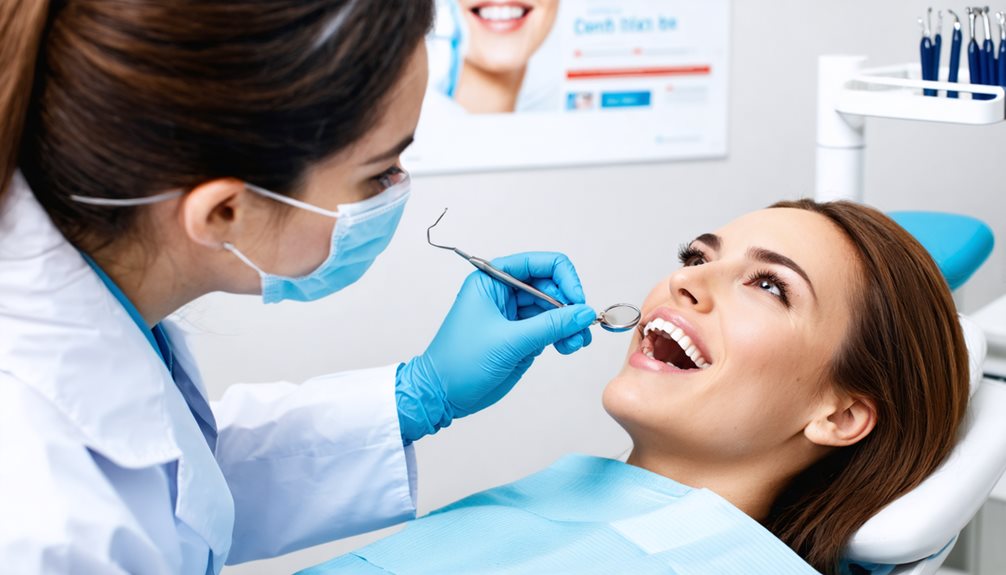
While regular screenings are vital for early detection, knowing what to expect during the screening process is equally important. Familiarize yourself with the screening techniques used by dental professionals to guarantee you’re prepared and comfortable throughout. Typically, the process involves a visual examination and palpation. The clinician inspects your oral cavity, looking for abnormalities such as red or white patches, or unusual lumps. They may use a tongue depressor for better visibility and a gloved hand to feel the tissues around your mouth.
Advanced screening techniques might involve specialized lights or dyes to enhance visualization of suspicious areas. These methods can identify areas not visible to the naked eye, increasing the accuracy of the screening. Making patient comfort a priority is essential, so communicate any discomfort to the dentist immediately. Proper positioning and relaxation techniques can alleviate anxiety and facilitate a thorough examination.
Understanding these details empowers you to engage actively in your oral health care. This knowledge helps you make informed decisions and enhances your control over the process, reducing uncertainty and improving overall experience. Remember, being well-informed is a vital step toward effective prevention and early intervention.
Ask Questions During Screening
During your oral cancer screening, asking questions is essential for gaining a detailed understanding of the process and its implications. By taking an active role, you guarantee you’re informed about the screening’s purpose, methodology, and outcomes. Start by inquiring about the screening benefits, such as early detection and increased treatment success rates. Understanding these advantages empowers you to appreciate the significance of regular screenings in maintaining your oral health.
Delve into specifics about the methods employed during the screening. Ask the healthcare professional to explain how they assess your oral cavity for signs of abnormalities. This may include visual examination, palpation, or the use of specialized tools. Clarifying these techniques provides insight into how they contribute to extensive oral care.
Additionally, focus on how oral hygiene impacts your screening results. You might want to ask how habits like brushing, flossing, and regular dental check-ups influence the detection of potential issues. This knowledge allows you to take proactive steps in maintaining your oral health, potentially mitigating risks associated with oral cancer.
Lastly, don’t hesitate to seek clarification on any medical jargon or findings. Being informed helps you make decisions aligned with your health priorities, guaranteeing you remain an active participant in your healthcare journey.
Follow Post-Screening Advice
After your oral cancer screening, adhering to the post-screening advice provided by your healthcare professional is essential for favorable outcomes. This guidance, rooted in clinical evidence, is tailored to your specific needs. Post screening care typically involves maintaining oral hygiene, scheduling follow-up appointments, and monitoring any changes in your oral cavity. These steps are vital in detecting any progression or recurrence early. Your healthcare provider may recommend specific oral care products or routines that align with your unique oral health status.
Being vigilant about symptoms awareness is equally important. Familiarize yourself with signs that might indicate potential issues, such as persistent sores, unexplained bleeding, or difficulty swallowing. Document any changes meticulously and report them promptly to your healthcare provider. This proactive approach empowers you to manage your health effectively, minimizing risks and ensuring timely interventions.
Take control by setting reminders for follow-up visits and implementing recommended lifestyle changes, such as reducing tobacco and alcohol use. These actions, guided by evidence-based recommendations, enhance your ability to maintain peak oral health. By diligently following post-screening advice, you’re actively participating in your health management, reducing the risk of neglecting vital signs.
Stay Informed About Advances
Staying informed about the latest advances in oral cancer screening and treatment is essential for optimizing your oral health strategy. By keeping abreast of the latest research and treatment options, you can make informed decisions that align with your health goals. Scientific advancements are continually reshaping the landscape of oral cancer detection and management, providing more precise, less invasive, and more effective solutions.
- Subscribe to relevant medical journals: Access peer-reviewed articles that provide insights into cutting-edge detection methods and treatment protocols.
- Attend dental health seminars: Network with healthcare professionals to discuss emerging technologies and their practical applications in oral cancer screening.
- Engage with online forums: Join platforms where dental professionals discuss the latest research and share case studies, enhancing your understanding of evolving methodologies.
- Consult with your healthcare provider: Regular discussions with your dentist or oncologist can reveal personalized treatment options based on the latest advancements.
Understanding these developments empowers you to engage proactively in your oral health management. By integrating new knowledge into your routine, you enhance your ability to detect potential issues early, maximizing treatment efficacy. Your awareness and initiative in staying informed can greatly influence outcomes, providing you with a stronger sense of control over your health trajectory.
Frequently Asked Questions
What Are the Early Signs of Oral Cancer?
You notice early symptoms like persistent sores, white or red patches, or lumps. Visual indicators include unexplained bleeding or loose teeth. These signs require immediate evaluation, ensuring proactive management. Trust your instincts and consult a healthcare professional promptly.
How Long Does an Oral Cancer Screening Take?
An oral cancer screening typically takes about 5-10 minutes during your dental visit. For ideal monitoring, your screening frequency should align with your regular dental appointments, usually every six months. This guarantees early detection and management.
Can Lifestyle Changes Reduce Oral Cancer Risk?
Yes, you can reduce oral cancer risk through lifestyle changes. Improving dietary habits, such as increasing fruits and vegetables, and implementing tobacco cessation strategies greatly lower risk, as evidence shows strong links between these factors and oral cancer incidence.
Is Oral Cancer Screening Covered by Insurance?
You should verify if your insurance coverage includes oral cancer screening. Policies vary, often affecting screening costs. Review your plan’s specifics and consult your provider for detailed information on what’s covered under preventive healthcare services relating to oral health.
Are There Any At-Home Screening Options Available?
You can perform self-examination techniques using at-home tools like mirrors and lighting to check for irregularities. Evidence suggests early detection’s critical, but these methods should complement professional screenings for thorough oral cancer assessment.

